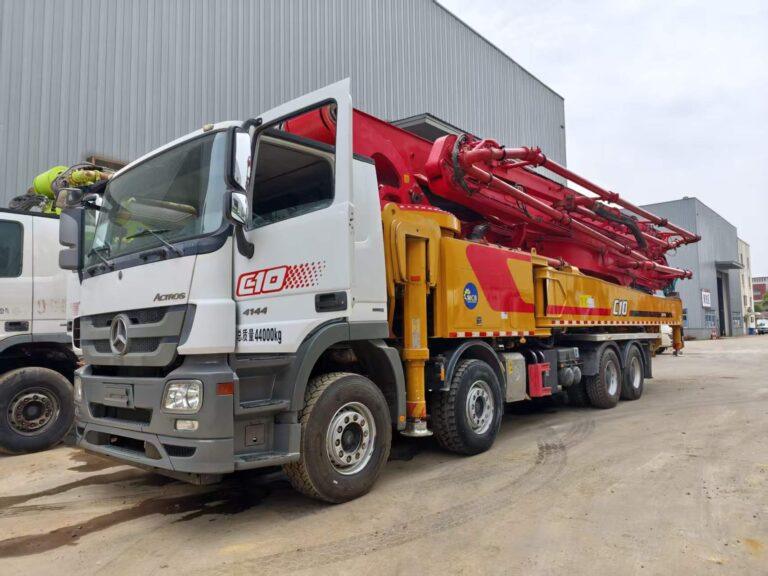
In the bustling world of modern construction, concrete pump trucks stand as indispensable “infrastructure titans.” These mechanical marvels deftly transport concrete to towering heights and hard – to – reach depths, leaving an indelible mark on city skylines. Analogous to a human body, the boom system serves as the agile “skeleton,” while the pumping system functions as the robust “heart.” Complemented by the chassis, turret, hydraulic, and electrical systems, each playing a crucial role, they jointly constitute the intricate anatomy of this engineering colossus. Let’s embark on a detailed exploration of these six core structures, peeling back the layers to reveal the secrets behind the efficient operation of concrete pump trucks.

Chassis: The Bedrock of Stability and Power
1. Automotive Chassis

Concrete pump trucks often rely on heavy – duty chassis from esteemed manufacturers such as Mercedes – Benz, Scania, Volvo, Shacman, and Isuzu. These specialized chassis are engineered with enhanced strength, reliability, and mobility. They not only propel the pump truck to construction sites but also endure the immense weight and vibrations generated during operation. In challenging terrains rife with uneven surfaces and obstacles, a high – performance chassis ensures seamless navigation, allowing the pump truck to reach its destination promptly and safely.

2. Transfer Case (PTO)
Nestled between the chassis beams, the transfer case acts as the nerve center for power distribution. It receives power from the engine via the gearbox and allocates it based on the pump truck’s operational mode. During the pumping process, the transfer case channels power to the oil pump, kick – starting the pumping mechanism. When the pump truck is on the move, it diverts power to the rear axle, enabling locomotion. This seamless power – switching mechanism is vital for the truck’s dual – function operation.
3. Auxiliary Beam
The auxiliary beam serves as a critical link between the chassis and the upper components. It effectively distributes the loads exerted by the pump truck during operation, reinforcing the vehicle’s structural integrity. By preventing uneven stress on the chassis, the auxiliary beam safeguards against potential damage, ensuring the pump truck remains reliable across diverse working conditions.
Boom Frame System: Precision in Reach and Placement

1. Boom Frame
Constructed from high – strength steel plates welded into a sturdy box – like structure, boom frames typically feature 3 to 7 sections. Advanced hydraulic folding mechanisms offer versatile folding options, including roll – up, Z – shaped, or a combination of both. Z – shaped folding proves ideal for confined spaces, as it minimizes the footprint during deployment, while roll – up folding provides a smooth and fluid extension process. These adaptable designs empower the boom to extend accurately to target locations, even in the most complex construction environments, ensuring precise concrete placement.

2. Connecting Rod
Within the boom system, connecting rods act as essential connectors between the various sections. They not only transmit forces but also maintain stability and precision during the unfolding and folding processes. By facilitating coordinated movement, connecting rods enhance the accuracy and efficiency of concrete delivery, enabling the boom to operate with fluidity and control.
3. Oil Cylinder
Functioning as the muscle of the boom, oil cylinders control its extension, retraction, and angling. Through the controlled flow of hydraulic oil, these cylinders execute precise movements, allowing the boom to reach the desired height and angle for concrete pouring. Whether extending to the peak of a skyscraper or adjusting for a low – lying pour, oil cylinders ensure accurate and responsive boom positioning.
4. Connectors
Connectors play a pivotal role in joining the boom, connecting rods, and oil cylinders. High – quality connectors are engineered to withstand extreme tension, pressure, and torque generated during operation. Their reliability is paramount, as they secure the components in place, preventing loosening or breakage and ensuring the boom system’s stability throughout its lifecycle.
Rotating Tower: The Axis of Expanded Operations

1. Turntable
Mounted at the center of the car chassis, the turntable serves as the foundation for the boom system. Capable of a full 360° rotation, it significantly expands the boom’s reach, eliminating the need for frequent repositioning of the pump truck. During construction, the turntable rotates fluidly, allowing the boom to cover expansive areas, thereby enhancing operational efficiency and productivity.
2. Rotary Mechanism
The rotary mechanism, comprising rotary bearings, reducers, and transmission gears, is responsible for the turntable’s smooth and accurate rotation. The slewing bearing, a critical component, bears massive axial, radial, and overturning forces, providing a stable base for rotation. The rotary reducer and transmission gears transmit power effectively, ensuring the turntable rotates steadily, enabling the boom to target specific concrete – pouring locations with precision.

3. Fixed Turret (Connecting Frame)
The fixed turret acts as a crucial link between the turntable and the chassis, transferring the combined weight of the boom system and pumping system. Its robust design ensures a secure connection, maintaining the structural integrity of the pump truck. By withstanding forces from all directions during operation, the fixed turret is integral to the truck’s overall safety and stability.
4. Supporting Structure
Typically consisting of four legs, the supporting structure plays a vital role in stabilizing the pump truck during operation. When deployed, the legs lift the chassis off the ground, evenly distributing the truck’s weight across a larger surface area. This reduces ground pressure and prevents instability, ensuring the pump truck remains steady during the pumping process. By minimizing shaking and tilting, the supporting structure safeguards construction quality and worker safety.
Pumping System: The Powerhouse of Concrete Conveyance

1. Pumping Mechanism
At the heart of the pumping system lies the pumping mechanism, which comprises the main oil cylinder, conveying cylinder, and concrete piston. Through the reciprocating motion of the main oil cylinder piston, hydraulic energy is converted into mechanical force, propelling concrete through the conveying cylinder. By generating sufficient pressure to overcome pipeline resistance, the pumping mechanism ensures a continuous and efficient flow of concrete to the pour site. Its performance directly influences the distance, height, and speed of concrete delivery.
2. Hopper
The hopper serves as the reception point for concrete from the mixer truck, functioning as both a storage and buffer zone. Equipped with an integrated mixing mechanism, it prevents concrete from settling and segregating, maintaining its consistency and workability. This ensures a smooth and uninterrupted pumping process, free from blockages or disruptions.
3. S – valve Assembly
The S – valve assembly, or distribution valve, is a key component that regulates the flow of concrete. During the pumping cycle, it alternates between the suction and discharge channels, enabling continuous concrete delivery. When in the suction position, the S – valve connects to the conveying cylinder, drawing in concrete. In the discharge position, it redirects the concrete into the conveying pipeline, ensuring a seamless and steady flow.
4. Swing Mechanism
Located behind the hopper, the swing mechanism controls the movement of the S – valve. Comprising a swing cylinder fixed seat, left and right swing valve oil cylinders, rocker booms, and swing cylinder clamps, it works in tandem with the pumping mechanism. By precisely controlling the S – valve’s swing, the swing mechanism ensures that concrete is directed accurately into the conveying pipeline, optimizing pumping efficiency.
5. Mixing Mechanism
Inside the hopper, the mixing mechanism, consisting of the mixing shaft, blades, and seals, continuously agitates the concrete. This prevents clumping and maintains the concrete’s homogeneity, ensuring it remains in an optimal state for pumping. A well – mixed batch of concrete flows more smoothly through the system, reducing the risk of blockages and enhancing overall pumping performance.
6. Piping Assembly
The piping assembly forms the conduit for concrete transportation, comprising conveying pipes, bent pipes, straight pipes, and pipe clamps. These pipes are designed to withstand the high pressure and abrasive nature of concrete, requiring excellent wear and pressure resistance. A well – designed piping system minimizes friction and resistance, facilitating efficient concrete flow and reducing energy consumption.
7. Boom Piping
Integrated within the boom, the boom piping transports concrete from the pumping mechanism to the end – hose. As the final link in the concrete delivery chain, its sealing and wear resistance are critical. A leak – proof and durable boom piping system ensures that concrete is delivered intact to the pour location, maintaining the quality of the construction and extending the lifespan of the boom.
Hydraulic System: Power Transmission and Precision Control

1. Pumping Hydraulic System
The pumping hydraulic system encompasses the main pumping oil system, distribution valve oil system, mixing oil system, and water pump oil system. Comprising components such as hydraulic pumps, valve groups, accumulators, and hydraulic motors, it supplies the necessary power and control for the pumping mechanism, distribution valve, and mixing mechanism. Through precise regulation of hydraulic oil pressure, flow rate, and direction, it ensures the smooth and efficient operation of these components, enabling high – performance concrete pumping.
2. Boom Hydraulic System
The boom hydraulic system manages the movement of the boom, legs, and turntable. It controls the extension, retraction, and angling of the boom, the deployment and retraction of the legs, and the rotation of the turntable. Driven by hydraulic oil, this system enables the boom to move with flexibility and precision, the legs to adjust quickly and accurately, and the turntable to rotate smoothly. By providing responsive and reliable control, the boom hydraulic system adapts to diverse construction requirements, ensuring the pump truck operates optimally in any scenario.
Electrical System: The Brain Behind the Brawn
1. Control Cabinet
The control cabinet serves as the nerve center of the pump truck’s electrical system. It integrates various control modules and display screens, providing operators with centralized control over the pump truck’s functions. From initiating pumping and controlling boom movements to monitoring mixing operations, the control cabinet offers a comprehensive interface for operation and management. Additionally, it features advanced fault – diagnosis capabilities, promptly detecting and alerting operators to any anomalies. This enables maintenance personnel to quickly identify and resolve issues, minimizing downtime and ensuring continuous operation.
2. Remote Control
The remote control provides operators with the flexibility to operate the pump truck from a safe distance. This enhances visibility and control, allowing operators to maneuver the pump truck with greater precision, especially in challenging or hazardous environments. By eliminating the need to be physically present in the cab, remote controls improve work efficiency and safety, reducing the risk of accidents and injuries.
3. Other Electrical Components
A network of sensors, relays, contactors, and switches forms the backbone of the electrical system. Sensors monitor critical parameters such as oil temperature, oil pressure, liquid level, and boom angle, transmitting real – time data to the control cabinet. Based on this information, the control cabinet can make instant adjustments, ensuring the pump truck operates within safe parameters. For example, if the oil temperature exceeds a threshold, the control cabinet triggers an alarm and initiates cooling measures. Relays, contactors, and switches manage the electrical circuits, enabling seamless operation of various electrical functions and safeguarding the pump truck’s electrical integrity.
This intricate system architecture empowers concrete pump trucks to undertake ambitious construction projects, from sculpting the spires of skyscrapers to fortifying the foundations of cross – sea bridges. When the “skeleton” extends with grace, the “heart” pumps with vigor, the chassis anchors firmly, and the hydraulic and electrical systems orchestrate with precision, these six systems coalesce into a formidable force. They transform raw concrete into the building blocks of modern infrastructure, embodying the pinnacle of engineering innovation and driving the continuous evolution of urban landscapes.
News flash:
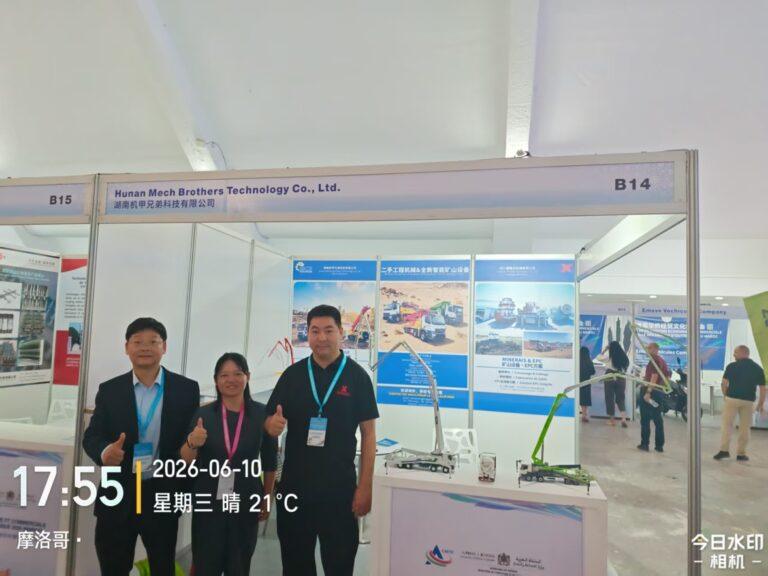
Recently, the used concrete pump trucks exported by Hunan Mecha Brothers Technology Co., Ltd. have gained high recognition from customers for their excellent performance.

It is reported that after the batch of equipment was put into use, the pumping was efficient and stable, the boom was flexible to extend, and various complex construction tasks were accurately completed. Customer feedback shows that the equipment performance far exceeds expectations, greatly improving construction efficiency and maintaining low costs. They fully recognize the product quality and service of Hunan Mecha Brothers Technology Co., Ltd. This positive review demonstrates the company’s strong capabilities and good reputation in the field of used construction machinery and equipment.

About Us:

Our company is a professional trading company for second-hand construction machinery, with a professional technical team. We provide assistance to customers to achieve success in the international market with the concepts of Integrity management, High quality, and Win win cooperation.
Website:www.mechabro.com/
Phone/WhatsApp/Wechat::+8613874918567
E-mail:[email protected]
#Construction #construction equipment #heavy machinery #Used #concrete pump #pump truck #construction machinery #used heavy machinery #crane #crane machinery #reachstackers #cement mixer truck #line pump #used machinery #used concrete pump truck #Sany #Zoomlion #XCMG #mechabro
 English
  French
  Spanish
  Arabic
  Russian
  Chinese