A used concrete pump truck should not be evaluated only by boom length, chassis mileage, or paint condition. Delivery-pipe wear directly affects operating safety, pumping reliability, and the cost of returning the machine to service. Before purchase, buyers should identify the pipe construction, verify the correct measuring method, review the highest-wear locations, and compare every reading with the pipe supplier’s limit. The practical rule is simple: request measured evidence for the specific unit, not a general statement that the pipeline “looks good.” This guide translates current concrete-pumping guidance into a buyer-focused inspection process.
النقاط الرئيسية
- Single-wall and twin-wall delivery pipes require different inspection methods.
- Wear is often concentrated near elbows, reducers, transition zones, and other high-turbulence locations.
- A thickness reading is useful only when linked to the exact pipe type, location, test date, and supplier limit.
- Replacement pipe must match pressure, material, geometry, clamp, and boom-weight requirements.
- For a used concrete pump truck, the strongest evidence combines measurement records, photos, maintenance history, and an independent physical inspection.
Why Delivery-Pipe Wear Matters on a Used Concrete Pump Truck
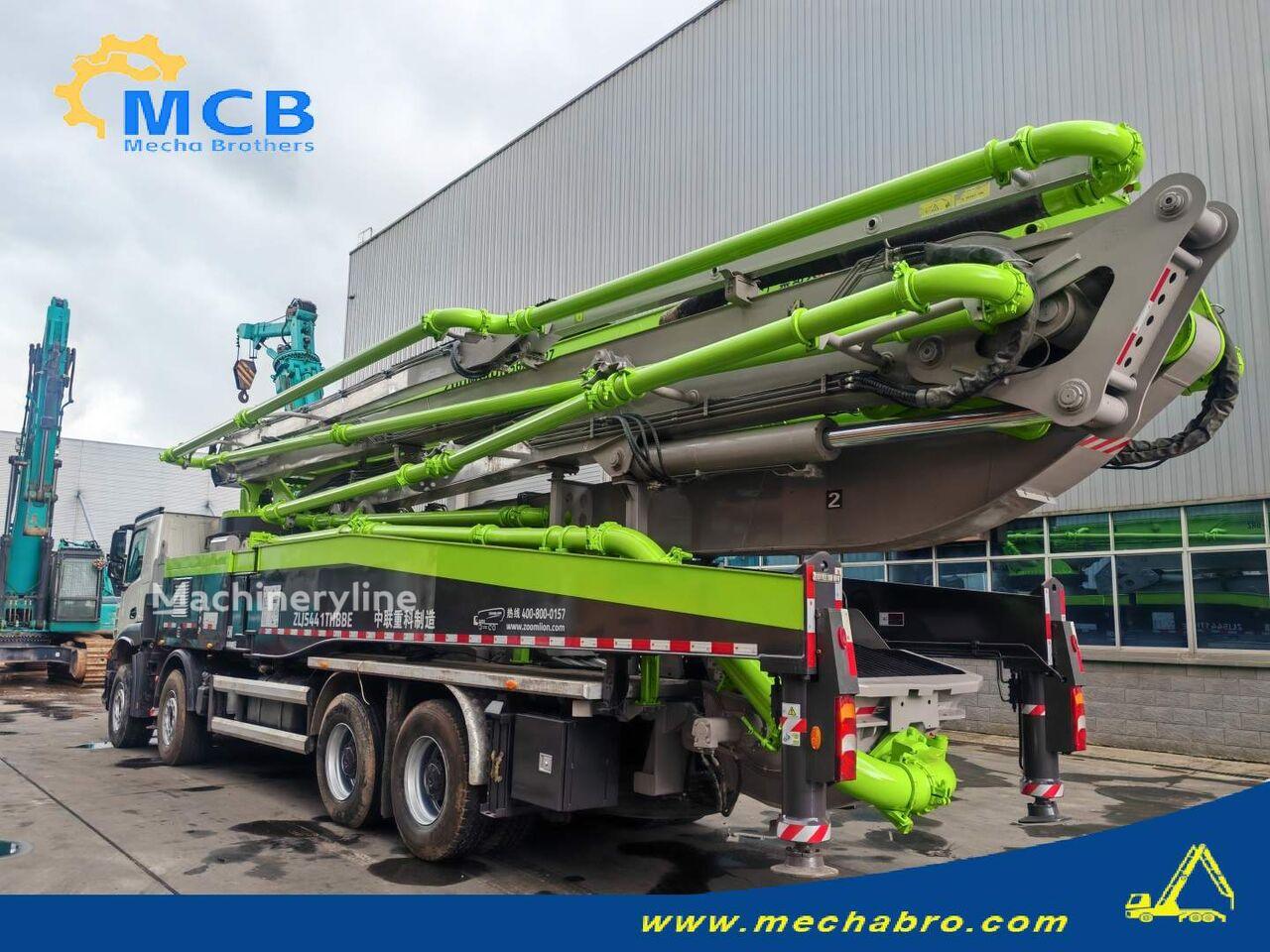
Concrete delivery lines operate under pressure while abrasive material moves through bends, reducers, and straight sections. The American Concrete Pumping Association (ACPA) notes that high pressure and high pumping speed can accelerate wear. It also identifies elbows, crossover areas, and transition zones as locations where abrasion can be more severe. A buyer therefore needs more than one convenient measurement from a straight, easy-to-reach section.
Wear evidence affects three purchasing decisions. First, it helps determine whether the unit can enter service immediately or needs pipeline work. Second, it improves the accuracy of a سعر شاحنة ضخ الخرسانة comparison because a lower purchase price may be offset by replacement parts and labor. Third, it helps the buyer plan safe commissioning instead of discovering a weak section under jobsite pressure.
Match the Test Method to the Pipe Construction
ACPA’s July 6, 2026 technical guidance draws an important distinction. Single-wall steel pipe can generally be evaluated with ultrasonic thickness testing when the equipment is suitable and the operator follows the pipe supplier’s instructions. Multiple readings should be taken around the pipe and along its length because wear is not always uniform.
Twin-wall pipe is different. ACPA explains that ultrasonic testing is not a reliable method for measuring the inner liner through the outer shell. The pipe should instead be removed and checked with a caliper or deep-throat micrometer. Buyers should ask the seller to identify the pipe system before accepting a report. A document that lists numbers but omits pipe construction and test method is incomplete evidence.
| Buyer checkpoint | الأدلة المطلوبة | لماذا هذا مهم |
|---|---|---|
| Pipe construction | Single-wall or twin-wall identification, supplier, part number if available | Determines the correct measuring method and applicable wear limit |
| High-wear zones | Readings and photos at elbows, reducers, transitions, and boom sections | Prevents a favorable straight-pipe reading from hiding localized wear |
| Measurement record | Date, tool, operator, position map, and lowest reading | Makes the result traceable to the specific machine |
| Replacement history | Invoices, part references, and installation dates where available | Shows whether new and heavily worn sections may have been mixed |
| Compatibility | Pressure rating, material, geometry, clamps, seals, and pipe weight | Helps avoid unsafe or boom-overweight substitutions |
Inspect the Whole Delivery-Line Route
A useful inspection map follows the concrete path from the hopper and outlet through the deck pipeline, turret or crossover area, folded boom sections, elbows, and end hose connection. The inspector should record several points at each critical section and flag the lowest reading rather than reporting only an average.
ACPA also warns that mixing new and worn pipe can create internal steps that increase turbulence. For a buyer, a recently replaced section is not automatically proof that the system is healthy. The surrounding clamps, elbows, and adjoining pipe should be reviewed as one system. Photos should show the exact position of each measured component so the records can be checked against the machine during an on-site inspection.
Do Not Treat the Minimum Thickness as a Universal Number
There is no responsible single minimum wall thickness for every concrete pump, pressure class, pipe design, or supplier. The acceptance limit must come from the manufacturer or pipe supplier for that component. The buyer should also confirm the maximum permitted working pressure and whether the proposed replacement line is approved for the boom design.
Weight matters as well as strength. ACPA cautions that a replacement pipe can be too heavy for the boom even if it appears physically compatible. Added weight changes structural loading and must be checked against the pump manufacturer’s requirements. Generic “heavy-duty” claims are not a substitute for documented compatibility.
A Six-Step Pre-Purchase Pipe-Wear Review
- Identify the system: request the pump model, delivery-line layout, pipe type, pressure class, and available part references.
- Request records: obtain previous thickness reports, pipe rotations, replacement history, pumped-volume records if available, and photos.
- Map critical zones: include elbows, reducers, crossover points, transitions, and areas where material changes direction.
- Use the correct method: ultrasonic testing for suitable single-wall pipe; removal and mechanical measurement for twin-wall pipe, following supplier guidance.
- Compare with documented limits: use the supplier’s minimum thickness and pressure rating for the exact component.
- Confirm the quotation scope: state whether replacement pipe, clamps, seals, labor, testing, and commissioning support are included.
Hunan Mecha Brothers Technology Co., Ltd. is based in Changsha, China and supplies used concrete machinery and related equipment. Its published services include equipment information support, inspection-related coordination, refurbishment, logistics coordination, and after-sales consultation. Buyers can review the truck-mounted concrete pump range, read the maintenance-records checklist, and discuss inspection scope through the صفحة الاتصال.
Specific availability, price, configuration, pipe condition, documentation, inspection scope, and delivery terms must be reconfirmed for each machine. This article summarizes industry guidance and does not replace the pump manufacturer’s instructions, the pipe supplier’s limits, or a qualified inspection.
الأسئلة الشائعة
How does delivery-pipe wear affect a used concrete pump truck price?
It can change the immediate repair budget and commissioning timeline. Compare quotes only after confirming which pipe sections, clamps, seals, testing, and labor are included.
Can ultrasonic testing be used on every delivery pipe?
No. ACPA says ultrasonic thickness testing is suitable for single-wall pipe, while twin-wall pipe should be removed and measured mechanically because ultrasound is not reliable for the inner liner.
Which parts of the pipeline usually deserve the closest attention?
Elbows, reducers, crossover areas, transition zones, and other locations with changing material direction or turbulence should receive multiple documented readings.
Can replacement pipe from another brand or model be installed?
Compatibility must be documented. Pressure rating, material, geometry, clamps, seals, and weight all matter; apparent dimensional fit alone is not enough.
What should I send when requesting a quotation?
Provide the required boom length and destination, then request the unit identification, pipeline specification, measurement evidence, replacement scope, machine documents, and delivery terms for the specific offer.
Request a Used Concrete Pump Truck with Verifiable Evidence
If you are sourcing a used concrete pump truck, ask Mechabro for the available unit details and a clearly defined inspection and delivery scope. The final condition, configuration, documents, price, and included services will be confirmed machine by machine.
المصادر
- American Concrete Pumping Association — “Common Questions About Pipe Wear and Measurement”, published July 6, 2026.
- Putzmeister — Delivery Lines brochure, accessed September 16, 2026.
- شركة شوينغ أمريكا — سلامة مضخات ذراع الرافعة, accessed September 16, 2026.

 English
  French
  Spanish
  Arabic
  Russian
  Chinese