A concrete pump’s maximum theoretical output is a specification for the pumping unit. Your placing schedule needs the volume the whole operation can sustain: concrete supply, the pump’s performance at the required pressure, and the placing crew’s capacity. For a Chilean contractor comparing equipment, begin with the planned pour volume and available placing time, then review the exact machine and pipeline arrangement. Keep an average over the complete placing period separate from a rate measured only while pumping. This makes a quoted capacity useful when choosing a machine and discussing a realistic delivery plan with Mechabro.
Key takeaways
- Compare output and pressure for the same pump configuration and operating mode.
- Record the time period behind every production figure.
- Build a supply and placing plan before choosing a larger pump.
- Request machine-specific operating information and an agreed inspection scope.
Read concrete pump output and pressure together
Start with the manufacturer’s data for the exact pumping unit. Its maximum volume and maximum pressure may refer to different operating modes. SCHWING’s SP 3800 technical document explicitly separates maximum-flow and maximum-pressure conditions and identifies its figures as theoretical values. Putzmeister’s BSA 2110 HP D5 sheet also pairs different flow and pressure values by pumping configuration.
Those stationary-pump documents illustrate how to read a specification. Their values belong to those models. When reviewing a used concrete pump truck, ask for the applicable pump configuration, performance information and operating instructions for the selected unit. Mechabro’s concrete pump types guide helps distinguish boom, line and stationary arrangements.
| Figure | What to ask |
|---|---|
| Maximum theoretical output, m³/h | Which pumping configuration and operating mode does it describe? |
| Maximum concrete pressure | What output is available at the pressure required by the proposed line? |
| Observed pumping rate | What material, route and measurement period were used? |
| Average placing rate | Which delays and interruptions are included in the elapsed time? |
Define the placing period before doing the arithmetic
Use the measured concrete volume placed divided by the elapsed placing time to calculate an average in cubic metres per hour. State the start and finish points. A pumping-only measurement answers a different question from an average that includes mixer changes and pauses to move between placing positions.
For an illustrative planning exercise, suppose a project places 120m³ over three hours. Its average is 40m³/h. If pumping was active for only 90 minutes within that period, the pumping-only average is 80m³/h. Both calculations describe the assumed exercise, with different time denominators. These numbers are not a Mechabro test result or a performance prediction for any listed truck.
Keep initial setup and final cleaning visible in the work schedule as separate allowances. That lets the contractor discuss both concrete placement and the total time the machine will occupy the site.
Build a delivery plan for a Chilean pour
For a buyer planning work in Santiago or another Chilean city, send the concrete supplier’s proposed delivery interval and usable load volume alongside the site layout. Include the approach road, waiting area and how mixers will reach the hopper. The local term rendimiento de bomba de hormigón is useful when asking whether a figure means machine capacity or production across the pour.
A second illustrative calculation uses 8m³ per load arriving every 12 minutes: five loads an hour would supply 40m³/h if that schedule held. This is an assumed delivery pattern, not a standard Chilean mixer size. Review actual load sizes, access restrictions and anticipated interruptions with the local supplier.
| Planning input | Information to send |
|---|---|
| Concrete supply | Usable load volume, proposed arrival intervals and mixer access |
| Delivery route | Pipe diameter, total length, elevation and bend layout |
| Concrete specification | Mix details and aggregate size for a pumping professional’s review |
| Placing operation | Target volume, available time and movement between discharge points |
Connect the plan to the selected machine
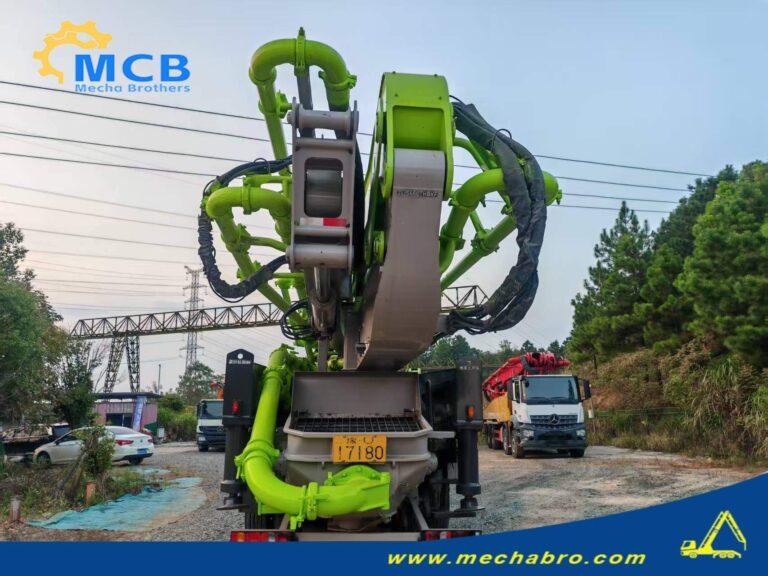
إن 2022 Zoomlion 62m-class SITRAK equipment article records 180m³/h theoretical output from that unit’s supplied material. Use this as a specification to investigate against your proposed work. Ask how the exact machine, its condition and the intended delivery arrangement will be reviewed.
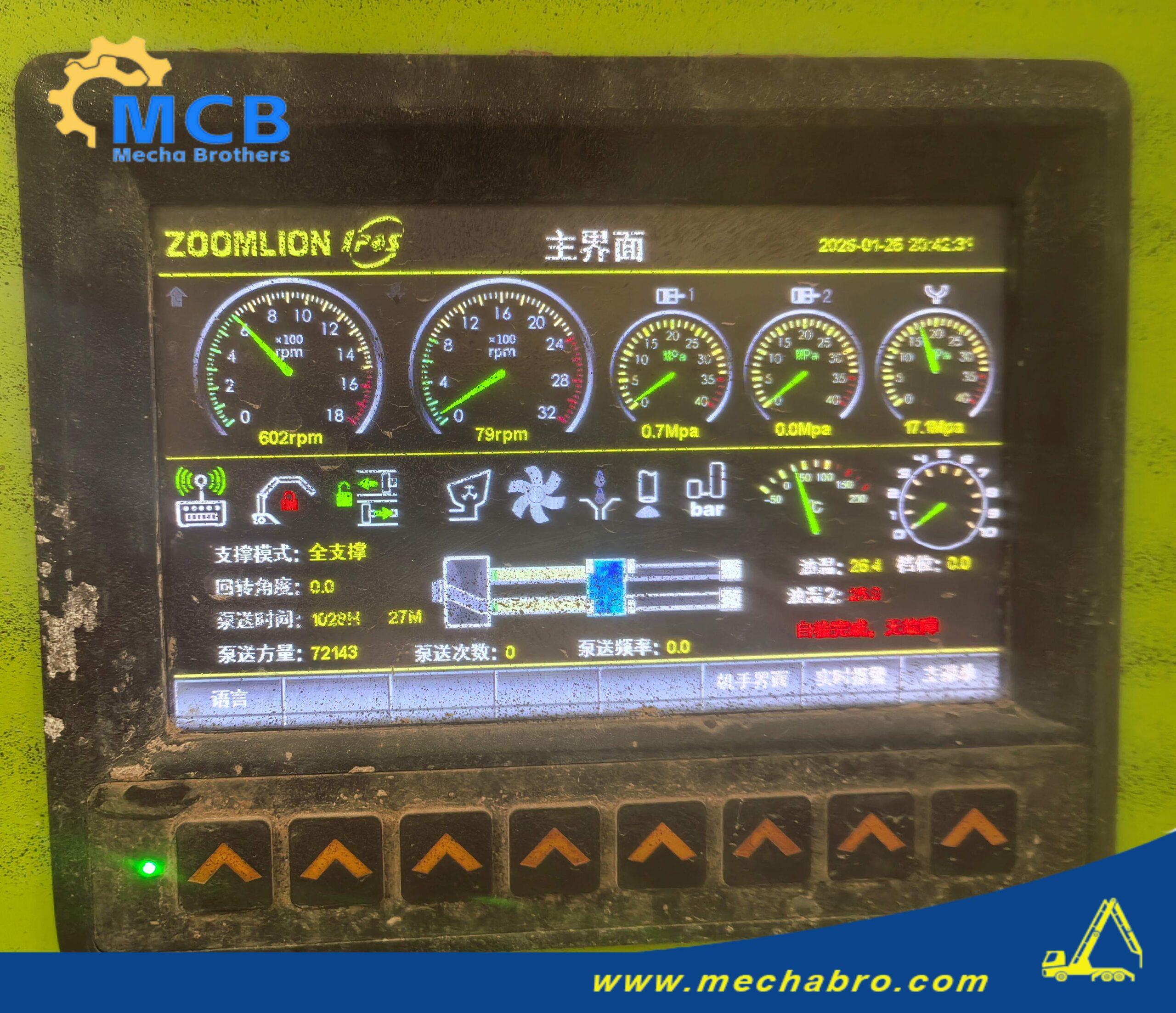
The original Mechabro field photo above shows that truck’s control display. Display readings belong in a wider equipment discussion with operating context and records. Agree how any volume or time counters will be interpreted before comparing production figures.
For a SANY concrete pump truck or XCMG pump truck alternative, apply the same questions to its own documentation. Mechabro’s truck-mounted pump listings provide machine references for an enquiry. The concrete pump truck price comparison should also identify included inspection, preparation and accessories.
Agree a useful observation scope
Discuss the material, pipeline arrangement, observation duration and information to record before an operating review. Request that the resulting record identifies the machine and conditions. Qualified personnel should plan and conduct the activity using the applicable instructions and site requirements. A water run and a concrete placement answer different questions about operation.
Mechabro’s inspection and order-support scope is defined for the selected machine. Current availability, condition details, documents, price and delivery arrangements are handled through the specific enquiry.
Buyer FAQ
Is theoretical concrete pump output the hourly site production?
It describes pumping-unit capacity under the stated specification conditions. Site production also depends on concrete supply, the required output at pressure, placing capacity and the time period being measured.
How do I calculate an average placing rate?
Divide the measured volume placed by the elapsed placing time in hours. Define the start and finish points, and keep pumping-only measurements separate from averages that include interruptions.
Can maximum output and maximum pressure be used together?
Check the exact model’s data and operating mode. Manufacturer documents can list different flow and pressure combinations, so review the applicable performance information for the proposed delivery arrangement.
Will a higher-rated pump always justify a higher price?
Compare the machine with your supply schedule, placing requirements and required output at pressure. Request a quotation that also identifies condition, included work and accessories for the specific unit.
What should a Chilean buyer send Mechabro?
Send the machine link, destination city, pour volume, available placing time, supply schedule, mix information and proposed delivery route. Add the purchase timing and inspection priorities so the team can define a machine-specific proposal.
Request a concrete pump proposal for your placing plan
Send Mechabro your concrete pump requirement with the selected unit link, destination and project inputs. The team can discuss the applicable equipment information, current offer and agreed inspection, preparation and delivery scope.
Technical sources
- SCHWING SP 3800 technical document, document reference 10311777.12.2019; accessed 16 October 2026. Used for theoretical ratings and flow-pressure interpretation.
- Putzmeister BSA 2110 HP D5 data sheet, CT 4666-4 EN; accessed 16 October 2026. Used for configuration-specific output and pressure values.


 English
  French
  Spanish
  Arabic
  Russian
  Chinese
  Portuguese