A used concrete pump truck should be evaluated for cleanout readiness before purchase because the hopper, agitator, delivery line, guards and washout arrangement affect safety, daily shutdown time and maintenance cost. During the first enquiry, ask which manufacturer-approved method applies to the exact machine, inspect the components that must be opened or handled, and agree who will provide the manual, test support and replacement wear parts. A clean machine is useful evidence of preparation, while a complete buying decision also considers pipeline condition, safety devices, service history and the operating practices your crew will use.
Key Takeaways
- Treat cleanout capability as part of the machine specification and handover scope.
- Match the proposed method to the exact pump, delivery-line arrangement and manufacturer instructions.
- Inspect hopper guards, agitator area, couplings, pipes, hoses and drainage points before agreeing the preparation scope.
- Ask for records and a practical handover plan so the receiving crew can maintain the machine consistently.
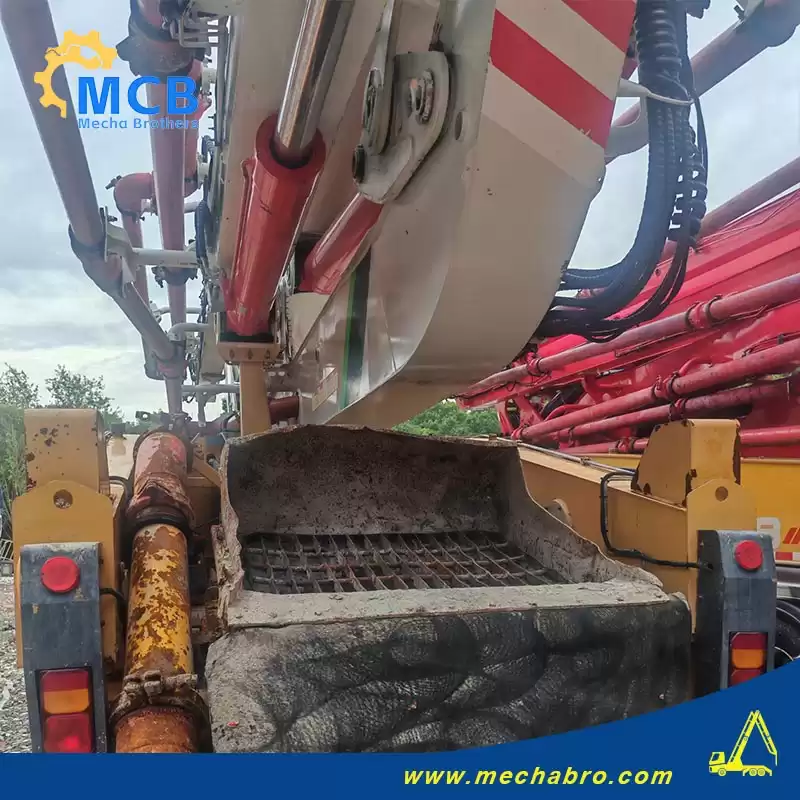
This original Mechabro field photo is connected to the public product reference 250724P751. It records the hopper and rear pump area for buyer review. The article uses the image to identify inspection zones; a cleaning test should have a separately agreed scope.
Why Used Concrete Pump Truck Cleanout Readiness Matters
Concrete residue hardens quickly and can narrow pipes, burden moving parts and make the next setup slower. On a used machine, the condition around the hopper and delivery system can also reveal how consistently previous crews approached end-of-shift care. Buyers should connect those observations to maintenance records and an operational inspection.
Putzmeister’s April 2024 safety manual identifies reverse pumping or forced cleaning with water as preferred delivery-line cleaning methods in its general guidance. The same manual explains that compressed-air cleaning creates increased hazards from released air, expelled concrete and uncontrolled line movement, and assigns that work to instructed participants under expert supervision. The exact procedure remains machine- and system-specific, so the purchase file should include the applicable operating information.
Buyer Decision Table for Cleanout and Handover
| Buyer check | What to review | Why it affects the purchase |
|---|---|---|
| Approved cleaning method | Exact machine manual, pipeline layout and accessories supplied | Defines the equipment, training and site preparation the buyer will need |
| Hopper and agitator area | Grate, guards, interlocks, visible wear, buildup and access condition | Connects daily cleaning with personnel protection and maintenance effort |
| Delivery line | Pipes, elbows, clamps, gaskets, end hose and wear measurements where appropriate | Supports a better estimate of near-term parts and downtime exposure |
| Pressure control | Manufacturer procedure, controls, warning labels and crew responsibilities | Helps the buyer plan qualified operation and safe intervention |
| Washout and environmental plan | Water source, collection area, residue handling and local site rules | Prevents the machine from arriving without a workable site process |
| Handover support | Manuals, service records, test scope, spare-parts list and consultation | Turns the purchase into an executable startup plan |
Inspect the Hopper, Guards and Pipeline as One System
The hopper is where routine cleaning and moving components meet. Review the grate, its safety function, the agitator area, visible concrete buildup, lubrication points and the condition of surrounding panels. Guards and safety devices should remain in place and function as designed. A buyer can also ask for a video or witnessed test that follows an agreed scope, with qualified personnel controlling the machine.
Then follow the material path. Examine pipe sections, elbows, clamps, seals and the end hose for wear, damage and residue. Thickness checks can be included when the inspection scope and access allow. Mechabro’s delivery-pipe wear guide explains how pipe condition fits into a wider purchase review. These checks also inform the initial spare-parts package and the buyer’s maintenance budget.
Compressed Air Requires a Defined Professional Procedure
Compressed air deserves explicit treatment in the purchase conversation. The American Concrete Pumping Association publishes dedicated cleanout guidance and a separate safety alert following a fatal blockage-removal incident involving compressed air. The practical procurement lesson is clear: ask which method the manufacturer specifies for the actual configuration, who is qualified to supervise it, how pressure is released, and which line-securing and exclusion controls are required.
Keep this at planning level during procurement. The receiving contractor should integrate the manufacturer’s instructions, local requirements and trained personnel into its own safe-work system. For high-rise lines, long runs or unusual configurations, involve a competent pumping specialist before operation.
Documents and Support to Include in the Enquiry
- Identify the exact pump truck, chassis, boom class and delivery-line configuration.
- Request the applicable operating and maintenance information, including cleanout guidance.
- Define the inspection or test scope and the people responsible for operating the equipment.
- List the pipes, hoses, couplings, cleaning accessories, tools and spare parts included in the quotation.
- Agree the machine preparation, logistics coordination and after-sales consultation required before delivery.
Hunan Mecha Brothers Technology Co., Ltd. is based in Changsha, China and supplies used concrete machinery independently. Buyers can browse the concrete pump truck guide and listings, compare broader concrete pump types, and review Mechabro’s inspection, refurbishment and export support scope. Current availability, price, configuration, condition, documents and delivery scope are discussed for the exact machine and destination.
Used Concrete Pump Truck Cleanout FAQs
Does a clean hopper mean the pump truck is in good condition?
A clean hopper is a useful preparation signal. Pair it with checks of the agitator, wear components, lubrication, hydraulics, controls, delivery line, boom and chassis to assess the whole machine.
Should compressed air be used to clean every concrete pump line?
The cleaning method should follow the manufacturer’s instructions for the exact machine and line arrangement. Compressed-air work requires a defined professional procedure, instructed participants and appropriate supervision.
What cleanout records should a buyer request?
Useful records include maintenance logs, pipe or component replacement history, operating manuals, inspection findings and the agreed test or preparation scope. Availability varies by machine.
How does cleanout condition affect concrete pump truck price?
Cleanout readiness is one part of the cost picture. Pipeline wear, hopper components, safety devices, hydraulic condition, included accessories, refurbishment work and delivery terms can all affect the quotation and early ownership cost.
Can Mechabro arrange an inspection before shipment?
Mechabro can discuss available machine information, inspection-related support, refurbishment, logistics coordination and after-sales consultation. The scope is agreed for the selected machine and enquiry.
Plan the First Operating Week Before You Buy
A buyer who defines cleanout, inspection, spare parts and crew responsibilities before shipment is better prepared for commissioning and routine maintenance. If you are comparing a used concrete pump truck, contact Mechabro with your required boom class, project, destination and inspection priorities. The team can discuss current machines and build a machine-specific quotation and support scope.
Sources
- Putzmeister, Safety Manual: Concrete Delivery and Placing Machines — Revision 20, April 2024; accessed 8 October 2026.
- American Concrete Pumping Association, Safety Bulletin: Clean Out Procedures — accessed 8 October 2026.
- American Concrete Pumping Association, Blockage Removal Safety Alert — accessed 8 October 2026.
 English
  French
  Spanish
  Arabic
  Russian
  Chinese
  Portuguese